Focus block and ritual
A block in your calendar is not yet a start. The ritual makes the first step so small that it begins within two minutes.
Why a block alone is not enough
You see the block in your calendar at 4:30 pm, and then you sit in front of a task that is big and unclear. This is where things get postponed. Fokuno starts at exactly that moment: instead of tackling the whole task, you ask yourself what the first step is. People who decide beforehand when and where they will do something follow through much more often (Gollwitzer & Sheeran, 2006, 94 studies, d = 0.65).
The ritual, step by step
- The first step. Before the timer runs, you write down what you start with. So small that it begins within two minutes. If your note from last time is still there, you carry on from it.
- How does it feel? The ritual briefly asks how it feels right now.
- Doesn’t fit right now? Then you press “Appointment doesn’t fit”, and Fokuno suggests up to three new times: today in 30 minutes at the earliest, tomorrow and the day after. If you just don’t want to, it briefly asks why. Honest is enough.
- The block runs. The timer counts, and if you like, music without vocals or your Spotify playlist plays. Spotify is optional.
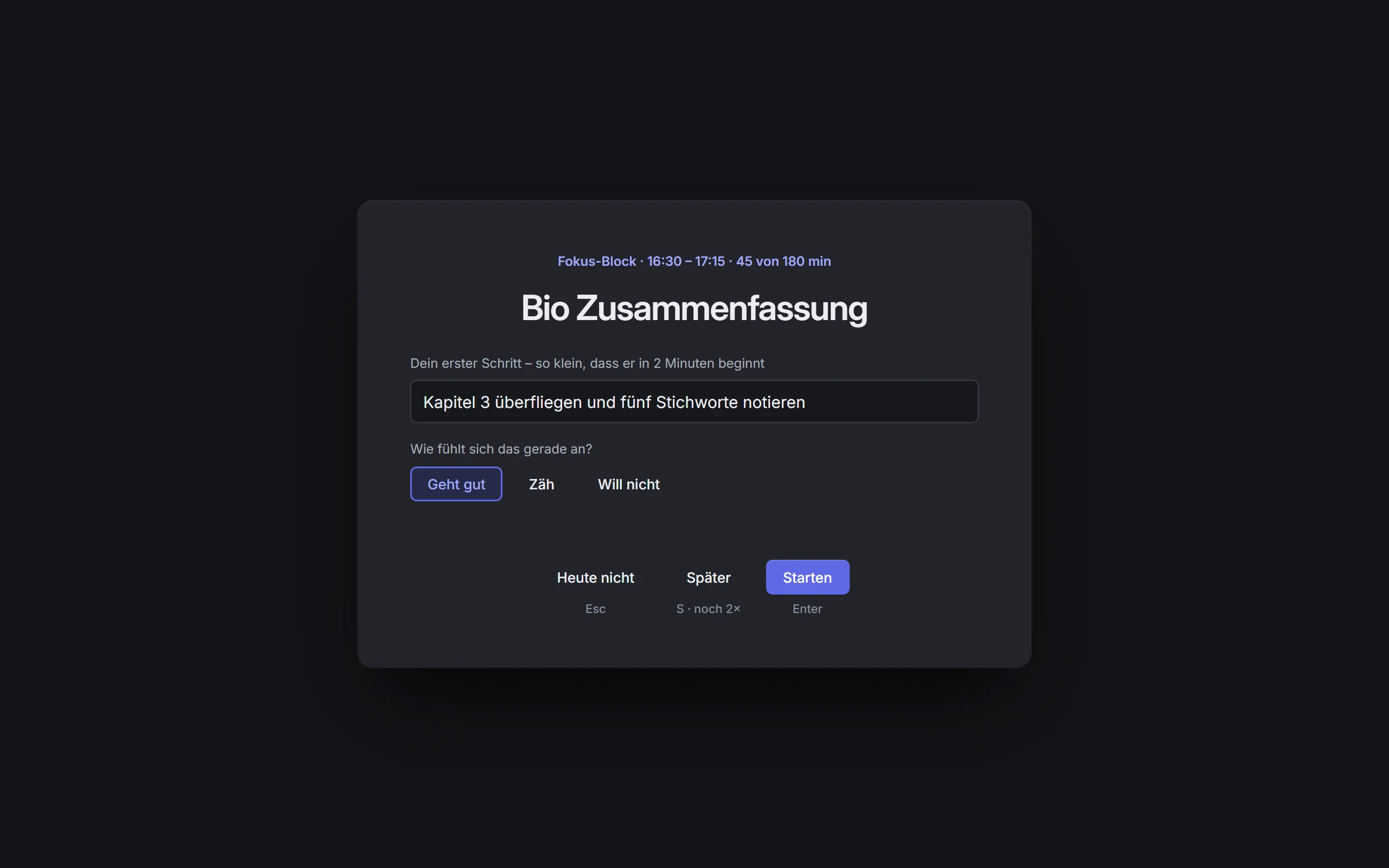
The note from last time
Tasks rarely take just one block. So the ritual shows you the note from last time, and you carry on where you left off. An open goal weighs on you as long as there is no plan for it; with a concrete plan the intrusive thoughts ease off (Masicampo & Baumeister, 2011).
When a block counts as done
You tick it off, or you were really in focus for at least 60 % of the time, and then it counts on its own. If you let a block pass without doing anything, it stays open until you tick it off or delete it.
The end-of-day check-out
In the evening you close the day in two minutes: a look back at the day, the question of what slowed you down, and the first step for tomorrow. After that the day is done.

Next
What happens in a block with distractions is covered in Distractions. How the blocks get into the calendar is explained in How Fokuno plans.
Try it in your week.
Sign up. When it’s your turn, the invitation arrives with the download.